  1. Posts/

Tools for working with Kubernetes

·226 words·2 mins
Chris Ayers
Author
Chris Ayers
I am a father, nerd, gamer, and speaker.

I’ve been in a number of internal and external calls where tooling to help work with Kubernetes keeps coming up. I thought I would share some of these cool tools in case you weren’t aware of them.

Tools
#

  • K9S
  • kubectx and kubens
  • fzf

K9S
#

K9S is a terminal based UI for interacting and managing Kubernetes Clusters. You can find k9s at https://github.com/derailed/k9s or their site https://k9scli.io/.
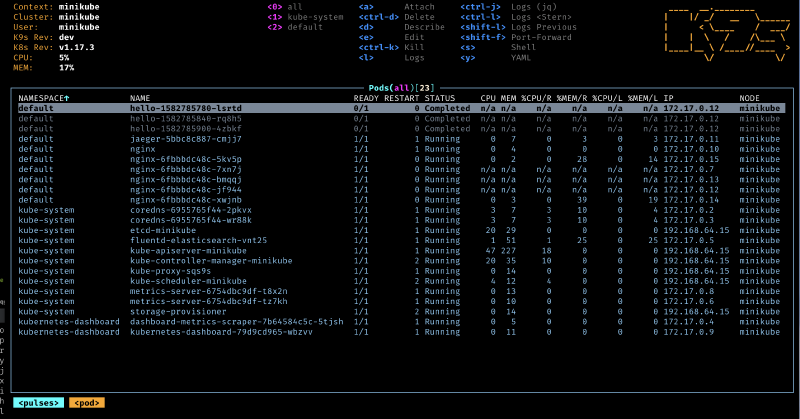
k9s main screen

Kubectx and Kubens
#

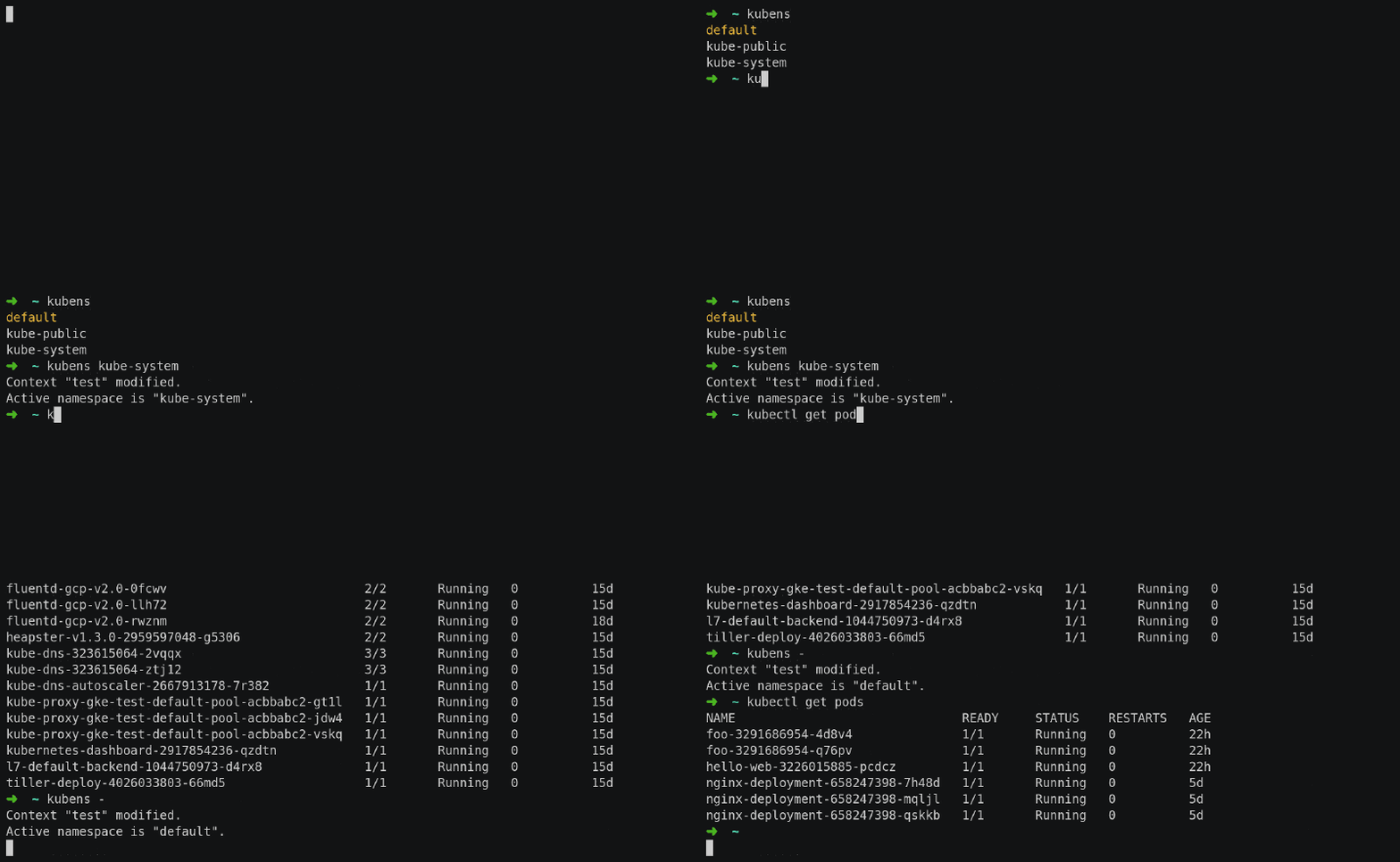
These tools are amazing at quickly switching context and namespaces while working with kubernetes. You can find k9s at https://github.com/ahmetb/kubectx or the author’s site https://ahmet.im/blog/kubectx/.

kubectx can show you the multiple contexts available, switch between them quickly, and create aliases.
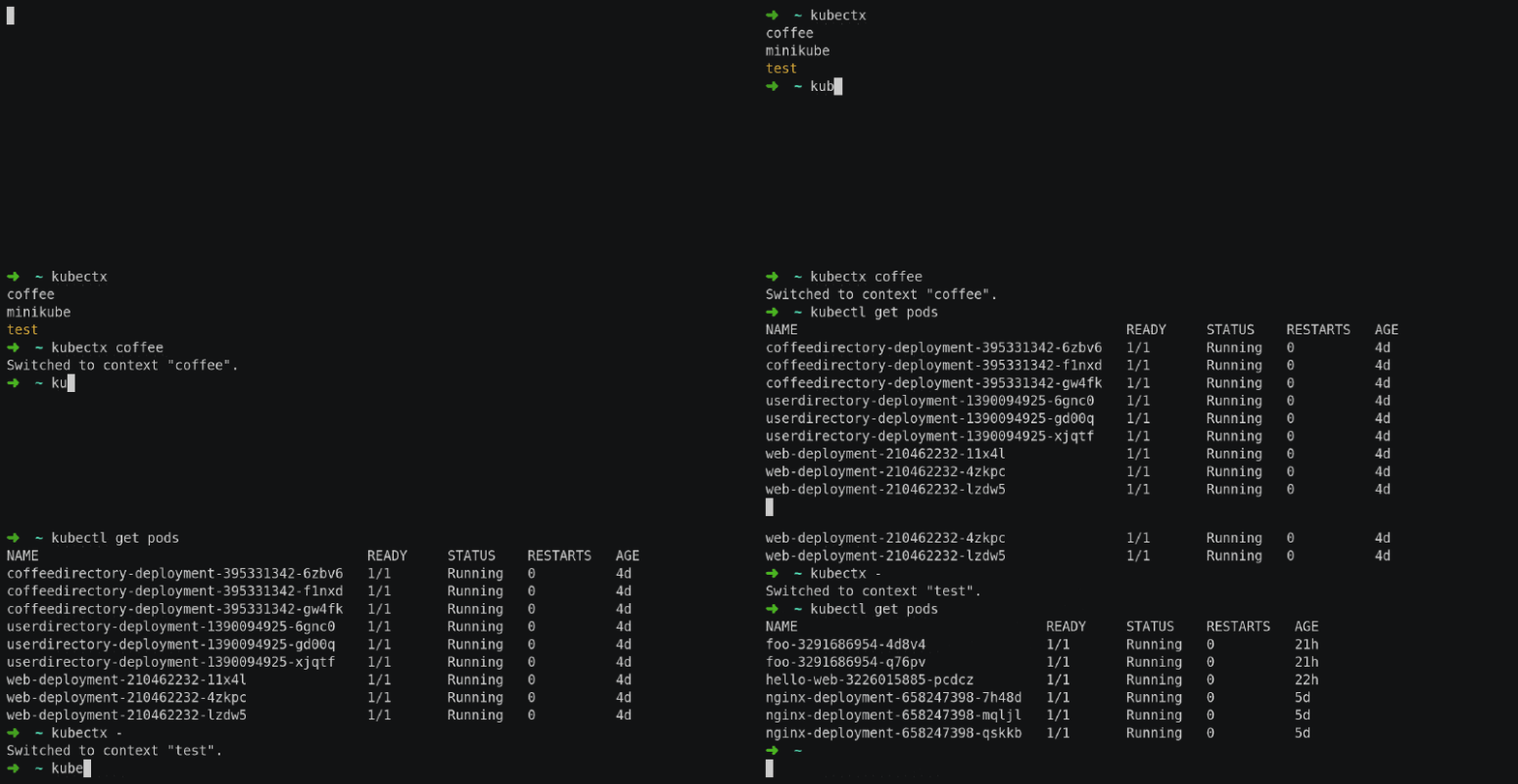
kubens can show you the multiple namespaces available, switch between them quickly, and create aliases.
fzf
#

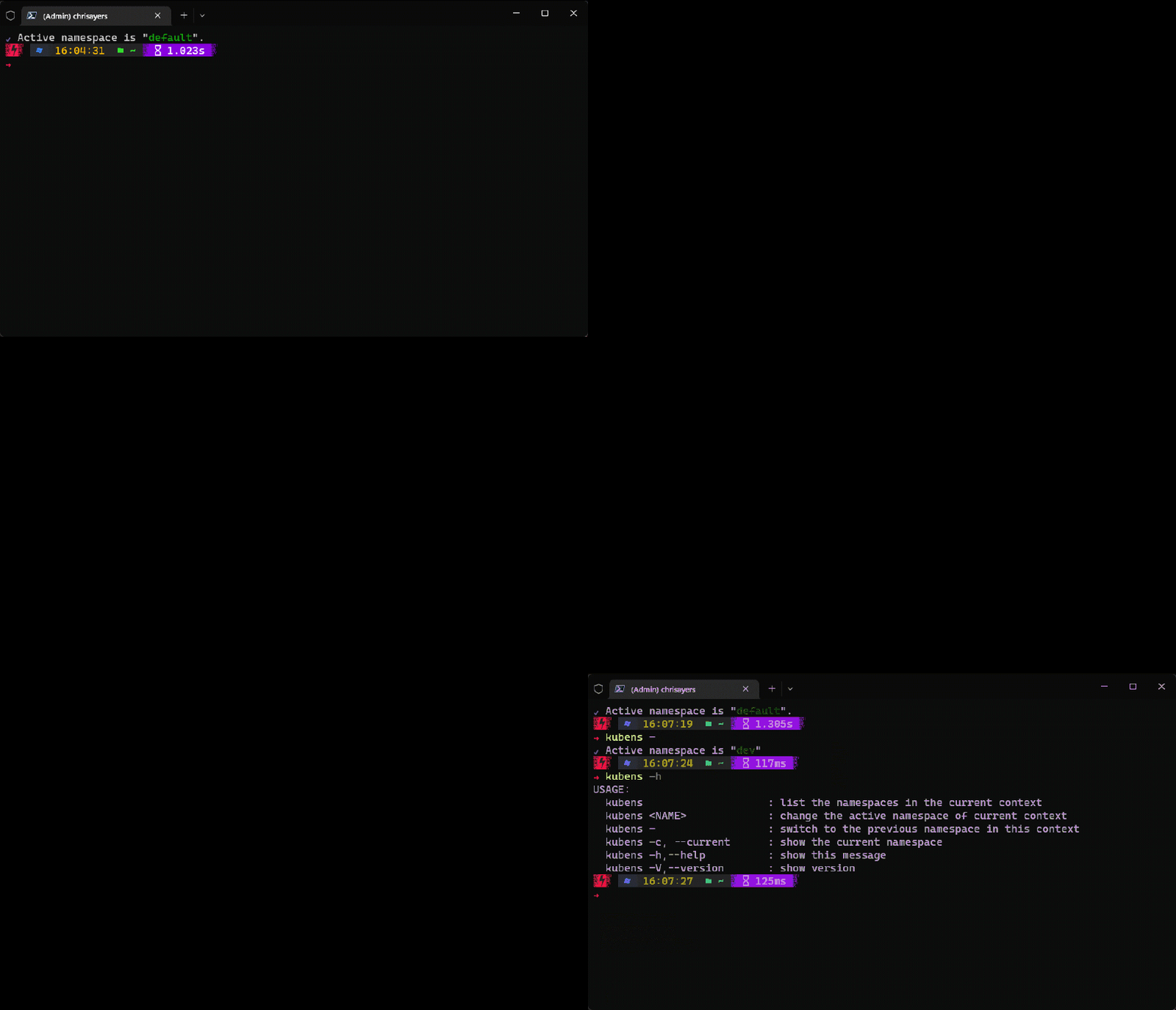
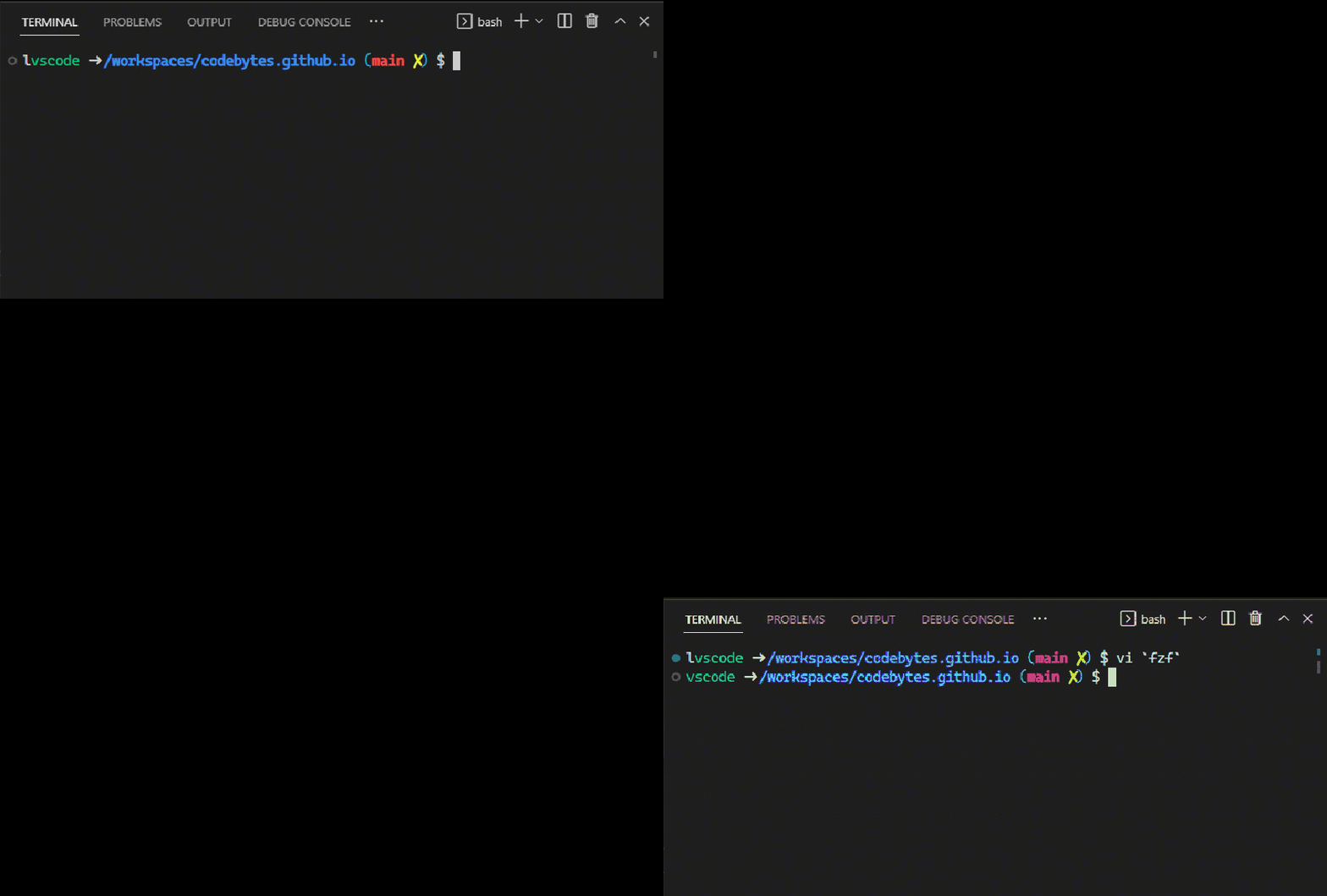
fzf is a different type of tool. This makes your other tools better. It works on a variety of platforms but what is allows you to do is get an interactive filter. kubectx and kubens will show the list and let you pick what you want instead of runnig multiple commands. You can leverage fzf to pick files to edit more quickly.
It works with lots of things, like vi.
Conclusion
#

If you work daily with Kubernetes you might already know about these tools. If you haven’t tried them, give them an install and play around.

Related

Clearing NuGet Caches

·680 words·4 mins
What is NuGet? # NuGet is an essential packaging tool used in the .NET ecosystem. NuGet is how packages for .NET are created, hosted, and consumed, along with the tools for each of those roles. For many, NuGet is used through Visual Studio to install and manage packages. The dotnet CLI also provides functionality for adding packages, updating packages, and creating packages.

WSL2, Docker, and Time

·395 words·2 mins
I’m running on a Windows Insider Slow build so that I can leverage WSL 2, the Windows Subsystem for Linux v 2. Its pretty incredible, because there’s now a Linux kernel inside Windows. Ubuntu is fast, its a wonderful development experience all my favorite linux tools. I can’t wait for this to be out of preview this year and in the mainstream windows releases. I’m also using the latest version of Docker Desktop, with WSL2 support. What this means is that instead of using Hyper-V to run a Moby Linux VM, docker runs directly on WSL2. It also has built-in Kubernetes support.

Presenting with VS Code - Screencast mode

·243 words·2 mins
I have been starting to speak and present a lot more, and was looking into great tools like Carnac and KeyPosé. But I just found out today about a feature I didn’t know existed inside Visual Studio Code, Screencast mode. This was introduced in January 2019. How did I miss it? To enable and use Screencast mode, Open the command palette, Ctrl + Shift + P. When first enabled, Screencast Mode is not what I wanted. It shows EVERY keypress. It also shows a little higher on the screen that I prefer. It also puts a little red circle everywhere I click the mouse, which is nice. Let’s configure it and see if we can clean up some of that. Open the command palette again (Ctrl + Shift + P) and go to the user settings.

Presenting Best Practices - Part 1

·940 words·5 mins
Presenting and speaking are skills that require practice to hone. I was a consultant for many years presenting to clients and customers of all levels and sizes. In addition, I started speaking and presenting at meetups, user groups, and conferences. Over the years, I practiced, I read, and I gave a lot of presentations. I’d like to share some of the learnings and best practices I’ve found in that time. I plan multiple posts, starting with Preparation. I’ll have more on slide design, and presentation tips.