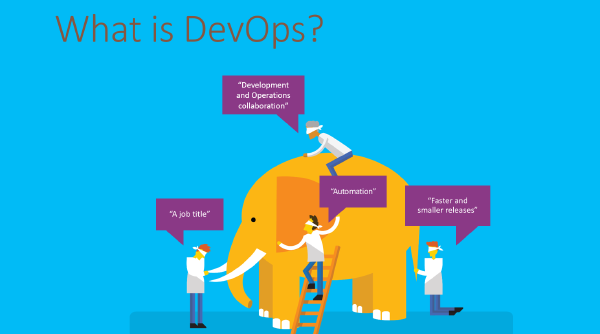
This is a phrase I end up using a lot while talking with clients. I used to use a different phrase about elephants but moved away from that language to be more respectful. Let’s start with what it means, at least in the context I use it, and why this phrase is so useful when talking about Devops.
The Meaning # I’ve seen and heard a few meanings and usages of the phrase, “Boil(ing) the Ocean”. I’ve heard many negative contexts like: to undertake an impossible task or project. I usually use it in this context, Here is a big task with lots to do, how do you get started and make progress?
As a DevOps Consultant a lot of what I do is spent on People and Processes. If you remember the definition of DevOps that I love is from Donovan Brown, “DevOps is the union of People, Processes, and Products to continuously deliver value to our end users”. I want to keep reiterating this, continuously deliver value to our end users. I bring this up because my job as a DevOps Consultant is to delivering value to my end users. But not all of us do. My amazing coworker (@_s_hari) and I have discussions about this quite a bit. As far as I know, he coined the term and gave me his blessing to blog about it.
What Isn’t DevOps? # Before I define DevOps, let’s get started with what DevOps isn’t. DevOps isn’t just a title, or a guy, or a department. DevOps isn’t just automating everying, and isn’t just logging everything. DevOps isn’t dozens of alerts every day, and isn’t an on-call rotation. DevOps isn’t agile or small releases. DevOps is a mindset.
I’m presenting soon on Advanced Git. I feel a lot of Developers and DevOps engineers know enough git to the job, but sometimes that’s it. I want to help people be more comfortable with the git command-line, and help alleviate some fear or hesitation in dealing with git edge cases.
While researching things, I came across a few neat tools I’m using to help describe things.
I’m running on a Windows Insider Slow build so that I can leverage WSL 2, the Windows Subsystem for Linux v 2. Its pretty incredible, because there’s now a Linux kernel inside Windows. Ubuntu is fast, its a wonderful development experience all my favorite linux tools. I can’t wait for this to be out of preview this year and in the mainstream windows releases.
I’m also using the latest version of Docker Desktop, with WSL2 support. What this means is that instead of using Hyper-V to run a Moby Linux VM, docker runs directly on WSL2. It also has built-in Kubernetes support.
This blog was posted as part of the Third Annual C# Advent. Make sure to check out everyone else’s work when you’re done here
Dependency Injection, or DI, is a Software Architecture Design Pattern. DI is something that comes up during discussions on SOLID, IoC (Inversion of Control), testing, and refactoring. I want to speak on each of these briefly because DI touches all of these. But before I really dive into things, I want to define what a dependency is. A dependency is any object that another object requires. So all of those classes, services, and libraries that we use to build our applications are dependencies.