
  1. Posts/

How Do You Boil the Ocean?

·329 words·2 mins
Chris Ayers
Author
Chris Ayers
I am a father, nerd, gamer, and speaker.

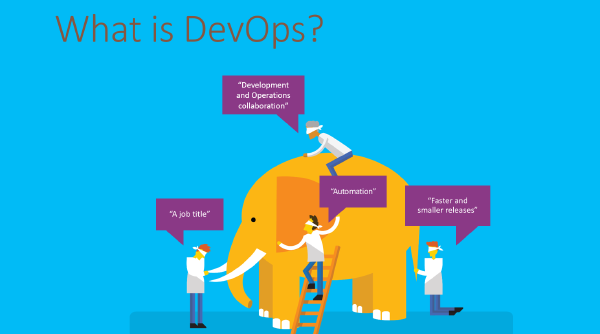
This is a phrase I end up using a lot while talking with clients. I used to use a different phrase about elephants but moved away from that language to be more respectful. Let’s start with what it means, at least in the context I use it, and why this phrase is so useful when talking about Devops.

The Meaning
#

I’ve seen and heard a few meanings and usages of the phrase, “Boil(ing) the Ocean”. I’ve heard many negative contexts like: to undertake an impossible task or project. I usually use it in this context, Here is a big task with lots to do, how do you get started and make progress?

Applied to DevOps
#

So how, and why do I apply this strange phrase to DevOps? Because as I work with clients, educating them and enabling them, they start getting excited. Depending on where they are in their DevOps journey, they might have a bigger or smaller list of things they want help with. Maybe its Infrastructure as Code (IaC), and a pipeline to help release it consistently and repeatedly. Maybe they are using a centralized version control system and are interested in moving to git and picking a branching strategy to work more effectively. When they release those cool new features, do they have monitoring and observability in place to know if and how their users are using those features? I could go on for a while, there are so many things that can impact an organization’s software delivery performance. And like “boiling the ocean” it seems like that can be an impossible task.

So how do you “boil the ocean”? One cup at a time. Iteratively make progress. Progress over perfection. Don’t choose to do nothing because its not perfect. Make an improvement, any improvement. Pay attention to the results, take that feedback and make another improvement. Just like a pot of water, the ocean won’t go from cold to boiling, it takes time.

Related

Snake Oil DevOps - BEWARE!

·442 words·3 mins
As a DevOps Consultant a lot of what I do is spent on People and Processes. If you remember the definition of DevOps that I love is from Donovan Brown, “DevOps is the union of People, Processes, and Products to continuously deliver value to our end users”. I want to keep reiterating this, continuously deliver value to our end users. I bring this up because my job as a DevOps Consultant is to delivering value to my end users. But not all of us do. My amazing coworker (@_s_hari) and I have discussions about this quite a bit. As far as I know, he coined the term and gave me his blessing to blog about it.

What is DevOps?

·230 words·2 mins
What Isn’t DevOps? # Before I define DevOps, let’s get started with what DevOps isn’t. DevOps isn’t just a title, or a guy, or a department. DevOps isn’t just automating everying, and isn’t just logging everything. DevOps isn’t dozens of alerts every day, and isn’t an on-call rotation. DevOps isn’t agile or small releases. DevOps is a mindset.

ARM - Part 3: Hook up the Pipes

·211 words·1 min
I’ve got a template straight from Microsoft. I want this wired into a CI/CD pipeline to I can play around and get quick feedback. I’m going to use Azure DevOps to help make all this possible. Let’s get those templates into a repository to get started. New repository, initialize it, add new files. Next, I’m going to create a new resource group to play around with my web app resources.

ARM - Part 2: Azure Quickstart Templates

·528 words·3 mins
Time to Dive in # I’m one of those guys that likes to learn by doing. Reading the documentation is great, and I do that a lot. But for me to really grok something, I need to play with it, run it, and probably blow it up. If you missed part 1, read along and come back. I need a WebApp setup for my sample project. I realized I can do it a few ways. Some of the ways are very manual, some are repeatable, but one stood out to me.

ARM - Part 1: Azure Resource Manager

The Journey Begins # I’ve been an azure developer for years. Originally I worked with “Classic Mode” and Cloud Services. Then I moved to ARM and Web Apps. Lately I’ve been doing DevOps but I only recently started working with ARM Termplates. First, let’s dive into a little history. History # Azure has grown and changed since it was first introduced. Originally, it was a research project called, “Project Red Dog”. Azure has been commercially available since 2010. For four years, there was a limited way to interact with Azure, ASM the Azure Service Manager.